

Grasse matinée : bonne ou mauvaise idée pour le sommeil et la santé ?
When should aerosol therapy be used?
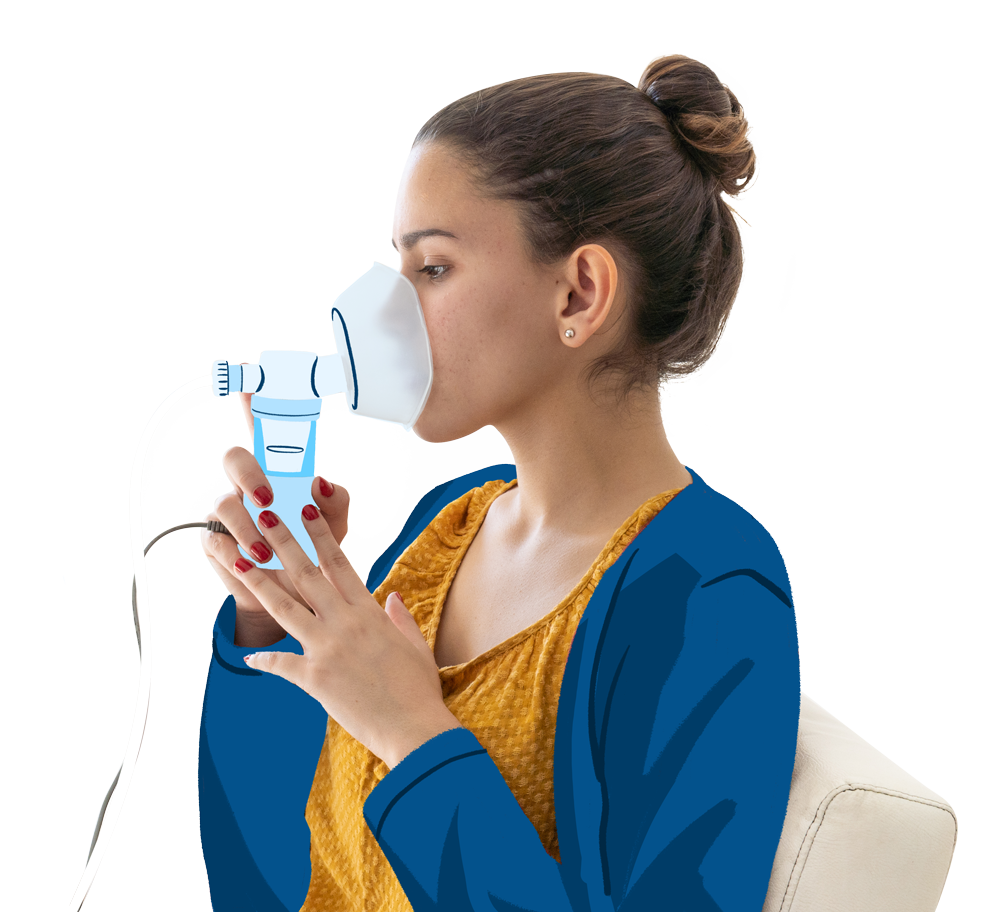
Aerosol therapy is a treatment method that involves administering medication as an aerosol—that is, fine particles suspended in the air—so it can be delivered directly into the airways. It is particularly useful when the medication needs to act locally in the bronchi, lungs or ear, nose and throat (ENT) area, providing rapid action while limiting side effects.
Reading progress
When Is Aerosol Therapy Indicated?
Aerosol therapy is a commonly used treatment for a range of respiratory and ENT conditions. It delivers medication quickly and directly to the intended site of action, with established clinical effectiveness and fewer side effects. Aerosol therapy is always prescribed by a physician after assessing each patient’s respiratory condition.
Respiratory Indications: Treating Lung Conditions
Aerosol therapy is used for lung infections and chronic respiratory diseases. Depending on the prescription, the aim is to deliver medication rapidly to the airways to make breathing easier, reduce inflammation or thin secretions. This targeted approach can provide greater effectiveness than systemic treatments for lung conditions.
The main respiratory indications include:
- Asthma : to open the airways and reduce inflammation, particularly during an exacerbation or asthma attack
- Chronic Obstructive Pulmonary Disease (COPD) : to improve breathing and reduce chronic shortness of breath
- Chronic bronchitis : to thin secretions and improve bronchial clearance
- Cystic fibrosis : to optimize airway clearance and treat chronic Pseudomonas aeruginosa infections
- Other lung conditions : bronchiectasis, respiratory distress syndrome and prevention of certain opportunistic infections
ENT Indications: Treating the Upper Airways
Aerosol therapy is also indicated in ear, nose and throat (ENT) medicine to treat upper-airway conditions. These conditions often require targeted local treatment to be effective.
The main ENT indications include:
- Sinusitis : infection or inflammation of the sinuses, particularly chronic or subacute sinusitis
- Laryngitis : inflammation of the larynx and vocal cords
- Otitis media with effusion : certain types of ear infection and middle-ear inflammation
- Rhinosinusitis : combined inflammation of the nose and sinuses
- Upper-airway inflammation : generalized or localized inflammation of the nasal passages and pharynx
An Advantage for Hard-to-Reach Areas
A unique advantage of ENT aerosol therapy is its ability to deliver medication to areas that can be difficult to reach, such as the sinuses or middle ear. Depending on the physician’s decision, this local delivery may supplement or replace other routes of administration. Direct access to these specific areas makes this treatment particularly effective for ENT infections that are resistant to conventional treatments.
Airway Humidification: Beyond Medication Delivery
Aerosol therapy is not used solely to administer medication. It can also humidify the airways by nebulizing saline solution or other suitable solutions. This non-medicated use remains important in several specific clinical situations.
Airway humidification is indicated in the following situations:
- Infants with bronchiolitis : to improve breathing comfort and help clear secretions in young children
- Patients with a tracheostomy : whose airways need regular humidification to prevent dryness and complications
- Patients with cystic fibrosis : to thin the thick secretions characteristic of the disease
- Patients receiving end-of-life care : to relieve respiratory discomfort and improve quality of life in palliative care
In these situations, simple yet effective humidification directly contributes to patient comfort and well-being.
Adapting to Different Patient Profiles
Thanks to the range of available devices (jet, ultrasonic and vibrating mesh nebulizers) and interfaces (mouthpiece, mask and nasal adapter), aerosol therapy can be adapted to many different clinical profiles:
- Children : including infants, with ultra-soft interfaces suited to their anatomy
- Adults : with various options based on the specific condition and personal preferences
- Older adults : with ergonomic, easy-to-use devices and comfortable interfaces
- Complex clinical situations : multiple chronic conditions, tracheostomy, palliative care or hospitalized patients
This personalized approach ensures that each patient receives treatment suited to their specific needs, age and clinical situation.
Medical Prescription and Follow-up
The decision to use aerosol therapy, as well as the type of aerosol treatment prescribed and the duration of treatment, always depends on a detailed medical prescription. The physician assesses your overall respiratory condition before prescribing aerosol therapy. Only your physician can determine whether this treatment is suitable for your specific condition and how it should be adapted to your individual situation.
Clinical Effectiveness and Treatment Adherence
The effectiveness of aerosol therapy depends on three interrelated factors: appropriate selection of the device and medication, correct and regular use in accordance with the prescription, and proper equipment maintenance. Incorrect use or poor adherence significantly reduces the expected effectiveness.
According to clinical recommendations from the SPLF (French-Language Respiratory Society) and the HAS (French National Authority for Health), you should use your aerosol therapy exactly as prescribed by your physician. Even if you feel better, it is essential to continue treatment for the prescribed duration. Stopping treatment early increases the risk of an exacerbation and recurrence of symptoms.
Common Mistakes That Reduce Treatment Effectiveness
Many patients do not receive the full benefit of aerosol therapy because of common mistakes:
- Using the wrong type of aerosol device : without medical advice, which considerably reduces effectiveness
- Preparing the solution incorrectly : incorrect dilution, expired solution or incorrect dosage
- Not cleaning the nebulizer after each use : residue can build up, impair performance and cause contamination
- Breathing too quickly or too shallowly : during inhalation, which limits how deeply the medication penetrates
- Stopping treatment too soon : because you “feel better,” before completing the prescribed course
- Neglecting regular device maintenance : which compromises the device’s long-term performance
Next Steps
Now that you understand the different indications for aerosol therapy, the next step is to learn how this treatment works in practice. Explore the different stages involved in assessing and prescribing aerosol therapy to understand how your physician decides whether this treatment is right for you.
Official and Scientific Resources
- HAS – French National Authority for Health: Nebulizer Systems for Aerosol Therapy
- Ameli – Long-Term Asthma Treatment
This content is provided for informational purposes only and is not a substitute for medical advice. Consult your physician to determine whether aerosol therapy is appropriate for your specific clinical situation and how to use it to obtain the greatest possible benefit.
Contents
FAQ
For Which Lung Diseases Is Aerosol Therapy Indicated?
Aerosol therapy is often used for asthma, chronic bronchitis, cystic fibrosis and other lung infections. It delivers medication rapidly to the airways, as prescribed by the physician.
For Which ENT Conditions Can Aerosol Therapy Be Used?
It may be prescribed for ENT conditions such as laryngitis, sinusitis or certain ear infections. Aerosol therapy then delivers treatment directly to the upper airways and hard-to-reach areas such as the sinuses.
Is Aerosol Therapy Suitable for Infants and Children?
Yes. Aerosol therapy is frequently used in infants—for example, for bronchiolitis—and in children. The equipment and interface (mask or mouthpiece) are selected according to their age to ensure effective and comfortable treatment.
Can It Be Used Solely to Humidify the Airways?
Yes. In some cases, aerosol therapy is used primarily to humidify the airways, for example in infants, patients with a tracheostomy or patients receiving end-of-life care. Solutions such as saline are then used without added medication.
Who Decides Whether Aerosol Therapy Is Indicated for Me?
A physician—such as a respiratory specialist, ENT specialist, pediatrician or general practitioner—decides whether aerosol therapy should be started. They assess your symptoms and respiratory or ENT condition, then determine whether this treatment method is appropriate for you.
Who Decides Whether Aerosol Therapy Is Indicated for Me?
Not necessarily. It may be used alone or alongside other treatments (tablets, syrups, inhalers, etc.), depending on the strategy defined by your physician. Your physician will adjust your care according to how the disease progresses and how you respond to treatment.


