

Grasse matinée : bonne ou mauvaise idée pour le sommeil et la santé ?
Sleep Apnea Treatment
Once the diagnosis has been confirmed, the goal of treatment is clear: to eliminate breathing interruptions and restore the quality of your sleep. By directly addressing apneas and hypopneas, treatment helps you regain lasting energy and greater alertness throughout the day. Above all, consistent treatment protects your long-term health by reducing the risks associated with chronic fatigue and drowsy driving.
Reading progress
Understanding Your Diagnosis: The Apnea-Hypopnea Index (AHI)
Management of obstructive sleep apnea-hypopnea syndrome (OSAHS) is guided by its severity, assessed primarily using the Apnea-Hypopnea Index (AHI). The AHI is the average number of abnormal breathing events (apneas and hypopneas) per hour of sleep, measured during a sleep study (polysomnography or overnight respiratory polygraphy, depending on the clinical context).
According to the French National Authority for Health (HAS), OSAHS is classified as mild, moderate or severe. In clinical practice, symptoms and coexisting conditions are also taken into account when assessing severity.
Your clinical symptoms are considered alongside the AHI. Physicians recommend treatment when two conditions are met: an AHI above 15 AND at least three of the following symptoms: excessive daytime sleepiness, severe daily snoring, choking sensations at night, marked daytime fatigue, nocturia (the need to urinate several times during the night), or morning headaches.
Treatment Options Based on Your Situation
Three main approaches are used to treat sleep apnea. The most appropriate treatment depends on several factors: your AHI, your individual symptoms, sleep quality, tolerance of treatment devices and personal lifestyle preferences. The official recommendations of the French National Authority for Health (HAS) guide treatment as follows:
- AHI above 30 (severe sleep apnea): Continuous Positive Airway Pressure (CPAP) is the established first-line treatment because its effectiveness is well proven. A mandibular advancement device may be offered if CPAP is not tolerated or is declined.
- AHI between 15 and 30 (moderate sleep apnea): Two clinical situations are considered. If you have poor-quality sleep with frequent micro-arousals, or an associated cardiovascular or respiratory condition, physicians recommend CPAP to optimize cardiovascular protection. If there are no cardiovascular complications and the device is well tolerated, a mandibular advancement device is often preferred because it may provide greater long-term comfort.
- At all levels of severity: Lifestyle and dietary measures are systematically recommended. They are an essential complementary part of treatment and help optimize outcomes.
Continuous Positive Airway Pressure (CPAP): First-Line Treatment
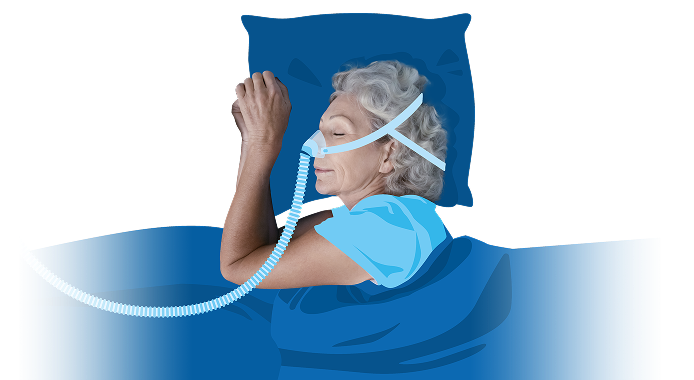
CPAP is the main first-line treatment for severe sleep apnea. The machine delivers air at a constant or automatically adjusted pressure through a nasal or full-face mask. This keeps the upper airway open throughout the night, effectively preventing breathing pauses and restoring continuous, restful sleep.
CPAP operates in two main modes. Fixed-pressure CPAP delivers a steady, uniform pressure throughout the night, as prescribed. Auto-adjusting CPAP automatically adapts the pressure from moment to moment according to the breathing needs detected by the device. Your prescribing physician selects the mode and pressure settings best suited to your diagnosis, the severity of your sleep apnea and your individual tolerance of treatment.
Mandibular Advancement Device: An Effective Alternative
A mandibular advancement device (MAD) is a custom-made oral appliance that moves the lower jaw forward. This widens the upper airway and helps prevent it from collapsing during sleep. By mechanically increasing the space in the pharynx, it reduces apneas and hypopneas.
A MAD is particularly suitable for several groups of patients: those with moderate sleep apnea without serious cardiovascular complications, those with favourable jaw anatomy, and especially those who cannot tolerate CPAP. For some patients, it offers better long-term comfort and acceptability because it is less intrusive and easier to integrate into everyday and social life.
However, a MAD requires an initial adjustment period. It may cause temporary discomfort in the jaw joints or a slight change in dental occlusion. Regular dental follow-up is also required, and the device must be custom-made by a qualified professional.
Surgery: A Last-Resort Option
Surgery should only be considered when markedly enlarged tonsils, enlarged adenoids or structural abnormalities of the upper airway obstruct breathing. Possible surgical procedures include:
- Tonsillectomy — Removal of enlarged tonsils
- Adenoidectomy — Removal of enlarged adenoids
- Septoplasty — Correction of a deviated nasal septum
- Other ENT procedures — Targeted upper-airway surgery based on the structural abnormality identified
However, surgery is generally considered only after other treatments, such as CPAP or a mandibular advancement device, have failed, because it carries surgical risks. Long-term outcomes vary considerably: some patients experience a substantial reduction in apneas, while others achieve only partial improvement. In practice, surgery does not always eliminate sleep apnea completely and may need to be combined with additional medical treatment.
Treatment Adherence: The Key to Effectiveness
Whatever treatment is chosen, its effectiveness depends on regular, consistent use. To obtain the full benefit of CPAP, you should use it every day and throughout your entire sleep period. Optimal adherence provides a genuine therapeutic benefit and supports continued reimbursement by the French national health insurance system (a minimum of 4 hours per night for reimbursement and clinical effectiveness).
If you stop or interrupt treatment during the night, sleepiness, fatigue and the other symptoms will gradually return. Adherence is the determining factor in long-term treatment success. Without regular, consistent use, even the best equipment and medical support cannot deliver their full therapeutic benefit. Regular medical follow-up, personalized therapeutic education and high-quality technical support are therefore important to maintain your motivation and long-term adherence.
Complementary Lifestyle and Dietary Recommendations
In addition to medical treatment, several lifestyle habits can significantly improve your condition:
- Avoid heavy evening meals to prevent digestive discomfort
- Maintain a sufficient and regular sleep schedule
- Avoid sleeping pills and alcohol, which can worsen sleep apnea
- Lose weight if necessary
- Treat nasal obstruction (allergies or a deviated septum)
Combined with regular use of your treatment, these measures create the best conditions for effective, lasting management.
Common Mistakes: Barriers to Adherence and Effectiveness
Stopping treatment too soon is one of the greatest barriers to success. The most common mistakes are:
- Stopping CPAP after 1–2 weeks: Initial discomfort is common; allow at least 2–4 weeks to adjust
- Adjusting the pressure yourself: Only your physician should change the pressure settings
- Changing masks too often: Instead of allowing sufficient time to adjust
- Neglecting the humidifier: It can significantly improve comfort during the adjustment period
- Ignoring sleep hygiene: Good sleep hygiene substantially improves treatment effectiveness
Key to success: Patients who continue through the difficult first few weeks generally report gradual improvement and remain on treatment long term. Persevere: it is the key to therapeutic success.
Next Steps
Now that you understand which treatment is best suited to your situation, the next step is to discover how it can make a real difference to your life. Learn about the tangible benefits of CPAP treatment for your sleep, energy levels, alertness and cardiovascular health.
Official and Scientific Resources
This content is provided for information only and is not a substitute for medical advice. Consult your specialist physician to determine the treatment best suited to your clinical situation.
Contents
FAQ
Is CPAP a lifelong treatment?
In most cases, CPAP is a long-term treatment and is continued for as long as sleep apnea persists. Any decision to reduce or stop treatment must be made by your physician after reassessing OSAHS and, where appropriate, performing a new sleep study.
How many hours per night should I use my CPAP machine?
A minimum of 4 hours per night is recommended, but ideally CPAP should be used throughout the entire sleep period. The longer it is used, the greater the benefits for fatigue, sleepiness and overall health.
Is CPAP noisy?
Latest-generation CPAP devices are designed to be very quiet. After a few nights of adjustment, most patients and their partners no longer find the machine noise disruptive.
What should I do if I have difficulty tolerating my mask or CPAP machine?
If you experience discomfort, such as air leaks, a painful mask or difficulty falling asleep with CPAP, speak promptly with your home healthcare provider and physician. Solutions are available, including changing the mask or size, adjusting the settings, adding humidification and providing additional support.
Is CPAP treatment reimbursed?
In France, CPAP treatment and home follow-up may be covered by the national health insurance system when medically prescribed and subject to the applicable criteria. Your home healthcare provider, such as SOS Oxygène, will inform and support you throughout the process.


