

Grasse matinée : bonne ou mauvaise idée pour le sommeil et la santé ?
When Is Aerosol Therapy Prescribed?
The need for aerosol therapy is generally assessed by a healthcare professional, particularly a physician specializing in pulmonology, respiratory medicine or ENT, depending on the situation. The physician evaluates the patient’s respiratory condition, determines whether aerosol therapy is indicated and selects the most appropriate treatment.
Reading progress
Who Decides Whether Aerosol Therapy Should Be Started?
The decision that aerosol therapy is needed is always based on a professional medical assessment. It follows a complete clinical examination and, where necessary, appropriate additional tests. The need for aerosol therapy is generally assessed by a physician specializing in pulmonology or respiratory medicine.
Before prescribing aerosol therapy, the physician considers several important factors:
- The underlying respiratory or ENT condition : asthma, chronic bronchitis, cystic fibrosis, sinusitis, laryngitis, an ear infection or another infection
- The severity of the symptoms : breathing difficulty, cough, airway congestion, pain, ENT discomfort or another clinical symptom
- Treatments already in place : the actual effectiveness of current treatments and whether an additional treatment is needed
- The patient’s living circumstances : age, comorbidities, environment, ability to manage treatment at home and personal circumstances
Stages in Assessing and Prescribing Aerosol Therapy
Determining whether aerosol therapy is needed follows a structured, multi-stage process. This treatment is generally prescribed by a physician specializing in pulmonology or respiratory medicine. The different stages are outlined below:
Main Stages of the Prescribing Process
- Medical assessment : initial examination and collection of information about symptoms and medical history
- Identification of the respiratory condition : accurate diagnosis of the condition causing the symptoms
- Determining whether aerosol therapy is needed : confirming that this treatment is genuinely appropriate and necessary
- Selection of medication or solutions : choosing the treatment according to the identified condition
- Prescription and treatment plan : issuing the final prescription with complete instructions for use
How the Medical Assessment Is Conducted
During the medical assessment, the physician will ask you in detail about your symptoms, such as breathing difficulty, coughing, wheezing, pain or ENT discomfort. They will then review your full medical history, current treatments and daily living circumstances. The physician will accurately identify the respiratory condition causing your symptoms, whether it is an infection, chronic disease, inflammation or another condition. Finally, they will determine whether aerosol therapy is truly appropriate for your specific situation.
Selecting Medication and Formalizing the Prescription
When aerosol therapy is selected as the appropriate treatment, the physician chooses the medication or solution to be nebulized. Depending on your needs, this may be medication, saline solution or a humidifying solution. The physician then issues a detailed prescription and treatment plan specifying the treatment duration, frequency of sessions and any special instructions for use.
Selecting the Aerosol Therapy Device and Interface
Depending on the condition being treated and the medication or solution to be nebulized, your physician will prescribe the appropriate type of aerosol-generating device and interface (mouthpiece, mask, etc.).
Device Selection Criteria
Several important criteria are considered when selecting the device:
- The area to be treated : lungs, bronchi, ENT airways or airway humidification
- The type of medication or solution : some devices are better suited to certain formulations
- Treatment duration and frequency : short- or long-term prescription, intensive or moderate use
- The patient’s age and abilities : ability to use the device independently or with assistance
Selecting the Appropriate Interface
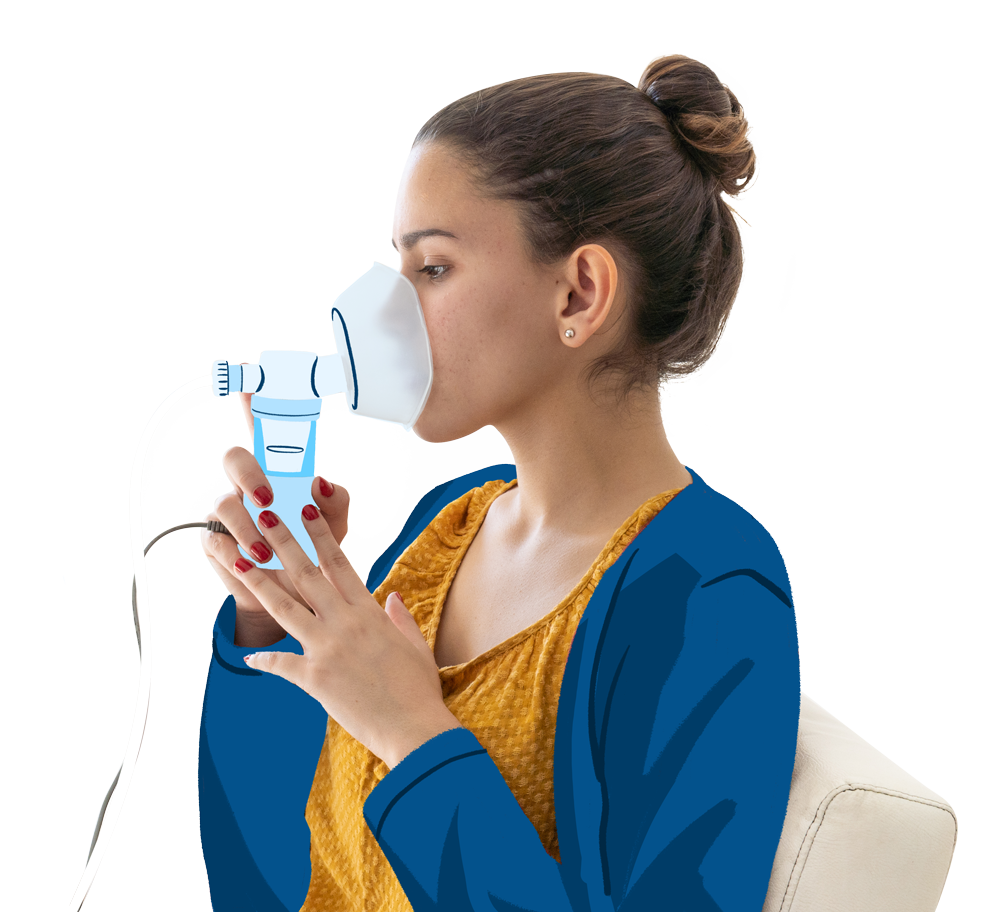
The interface (mouthpiece, nasal mask, oronasal mask or nasal adapter) must ensure effective and comfortable inhalation to support good treatment adherence. It can be adapted for adults and children, taking their anatomy and natural breathing pattern into account. The choice depends on your facial anatomy, breathing pattern and personal comfort preference.
After the Prescription: Setting Up Treatment at Home
Once aerosol therapy has been prescribed, a home healthcare provider such as SOS Oxygène helps put the treatment into practice. The provider installs the prescribed equipment and explains every aspect of its use, including preparing the solution, setting up the device, using the correct inhalation technique and maintaining the equipment regularly.
The physician remains responsible for the prescription throughout treatment and may adjust it according to changes in your symptoms and clinical response. Regular follow-up visits allow the provider to check that treatment is being delivered correctly, maintain the equipment and replace the necessary consumables.
Treatment Effectiveness and Follow-up
Regular adherence is essential for aerosol therapy to be effective. You must use your device exactly as prescribed, at the appropriate frequency and with the correct technique. Regular medical follow-up helps assess treatment effectiveness and promptly identify any need for adjustment or modification.
Next Steps
Now that you understand how the need for aerosol therapy is assessed and how it is prescribed, the next step is to learn how to use your nebulizer correctly and maximize its effectiveness. Discover the different stages involved in assessing and prescribing aerosol therapy to understand how your physician decides whether this treatment is right for you.
Official and Scientific Resources
- HAS – French National Authority for Health: Nebulizer Systems for Aerosol Therapy
- Ameli – Aerosol Therapy Guide
This content is provided for informational purposes only and is not a substitute for medical advice. Consult your physician to determine whether aerosol therapy is suitable for your specific clinical situation and how it should be adapted to your individual needs.
Contents
FAQ
Who Decides Whether to Prescribe Aerosol Therapy?
A physician decides whether aerosol therapy should be started—most often a respiratory specialist, ENT specialist, pediatrician or general practitioner. They assess the clinical situation, symptoms and underlying condition before recommending this treatment.
What Criteria Does the Physician Use to Select Aerosol Therapy?
The physician considers the underlying condition (asthma, chronic bronchitis, cystic fibrosis, sinusitis, laryngitis, an ear infection, etc.), the severity of the symptoms, the response to current treatments and the patient’s living circumstances. They then decide whether aerosol therapy is the most appropriate route of administration.
Is Aerosol Therapy Always Necessary for a Respiratory or ENT Problem?
No. Aerosol therapy is not routinely required. It is one of several possible treatments, alongside tablets, syrups, sprays and inhalers. The physician selects this route when they consider that local treatment delivered directly to the airways is the most appropriate option.
How Is the Decision to Start Aerosol Therapy Made?
The decision follows several stages: a medical assessment, identification of the respiratory or ENT condition, confirmation that aerosol therapy is needed, selection of the medication or medications to be nebulized, and finally the prescription and treatment plan (duration, frequency and instructions for use).
Who Selects the Type of Device and Mask Used?
The physician prescribes the type of aerosol-generating device and interface (mouthpiece, nasal mask, oronasal mask, nasal adapter, etc.). A home healthcare provider such as SOS Oxygène then installs the appropriate equipment and supports the patient in using it.
Can I Change the Treatment or Equipment Myself?
No. Any change to the medication, dosage, session frequency or type of device must be discussed with the physician. The provider may adjust certain practical aspects, such as comfort or the interface, but always within the scope of the medical prescription.


